
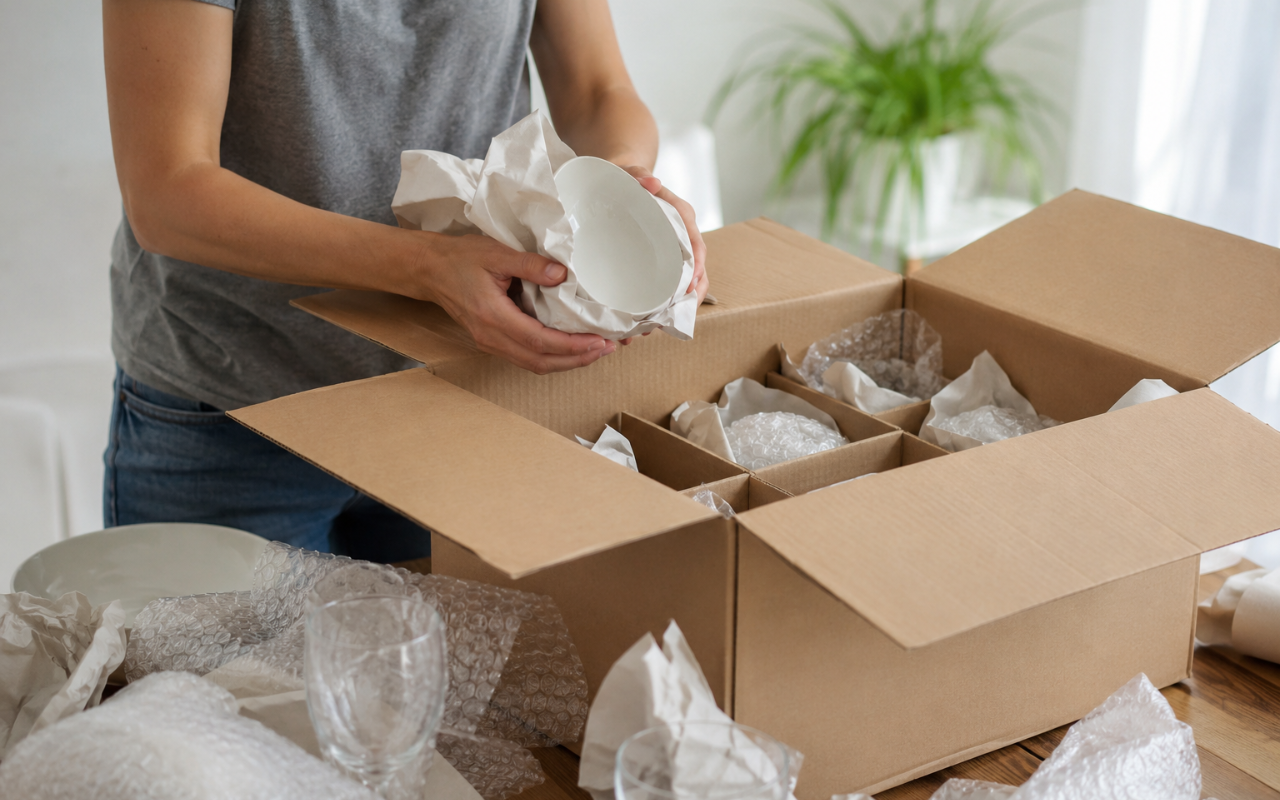
Moving valuable breakables can feel stressful, especially when the trip covers many miles. With the right plan, packing fragile items for long distance move protection becomes easier, safer, and more organized.
At White Red Moving & Storage, we focus on careful steps that reduce movement and impact. Our packing and unpacking support can also give you practical help when you need extra care.
Choose Materials That Match Each Fragile Item
Good protection starts with strong boxes, packing tape, paper, bubble wrap, dividers, and soft fillers. Use smaller boxes for dense items and larger boxes for lighter pieces. A box should feel firm, close securely, and hold its shape during lifting.
The choice between bubble wrap vs packing paper for glass depends on the item. Packing paper protects surfaces from scratches, while bubble wrap adds impact protection. For delicate glassware, use paper first and bubble wrap as the outer layer.
- Use corrugated boxes with firm walls.
- Choose clean, unprinted packing paper.
- Add dividers for glasses, plates, and bottles.
- Keep strong tape ready for every seam.
How Should You Wrap Breakables for Moving?
To understand how to wrap breakables for moving, begin with a clean, flat surface. Place each item on packing paper, fold the corners around it, and secure the wrap without pressing too hard. Add bubble wrap around thin glass, sharp edges, or valuable pieces.
Our team at White Red Moving & Storage uses layers based on each item’s shape and weight. Hollow objects should be filled with paper, while plates should stand vertically with separators. For more detail, review our guide on how to pack fragile items safely.
Build Stable Layers Inside Every Moving Box
A strong base keeps delicate items away from hard box surfaces. Start with crumpled paper, foam, or air pillows. Place heavier pieces at the bottom, then add lighter items above them. Keep each object separated so glass and ceramic surfaces do not touch.
When packing fragile items for long distance move travel, empty space can cause damage. Fill every gap with soft material, but do not force items together. A well-packed box should feel snug when gently moved, without making noise inside.
- Create a padded base before adding items.
- Place heavier pieces below lighter ones.
- Fill side gaps and top space completely.
- Test the box with a gentle movement.
Use Specialty Boxes for Awkward Valuables
Some belongings need more than a standard carton. Dish boxes, mirror boxes, bottle cells, and picture boxes give extra support where common boxes may fail. These options are useful for framed art, stemware, lamps, and other items with unusual shapes.
With White Red Moving & Storage, you can choose support that fits the item instead of forcing it into the wrong box. Our overview of moving fragile objects safely explains how tailored protection can reduce pressure on delicate surfaces.
Label Fragile Boxes for Clear Handling
Simple fragile box labeling tips can help everyone understand how a carton should be carried. Write “FRAGILE” on at least two sides, add “THIS SIDE UP” where needed, and name the room or contents. Clear labels also make unloading and unpacking easier.
- Write labels in large, easy-to-read letters.
- Add arrows to show the correct upright position.
- Mark heavy cartons to prevent sudden lifting.
- Number boxes and keep a simple inventory.
When you choose White Red Moving & Storage, we keep handling instructions visible and easy to follow. Good labels support careful loading, better box placement, and faster delivery into the correct room.
Protect Electronics, Furniture, and Delicate Decor
Electronics need separate care. Remove cables, batteries, and loose parts before wrapping each piece. Place small accessories in labeled bags. Use original packaging when available, or select a firm box with enough padding on every side.
Furniture with glass, mirrors, or polished surfaces should be taken apart when possible. Cover corners, remove shelves, and secure doors. For local support, our packing services in San Mateo, CA can help prepare mixed household items for a safer long-distance trip.
Photograph cable connections before removal, wrap screens with soft material, and use corner guards on tables and frames. Keep screws and other hardware in labeled bags so each piece can be assembled correctly after delivery.
Frequently Asked Questions
What is the safest way to pack glassware?
Wrap each piece in packing paper, then add bubble wrap around thin or valuable glass. Keep glasses upright in divided boxes. Our fragile item packing guide covers more step-by-step protection methods.
Should plates be packed flat or upright?
Pack plates upright, like records, with paper or dividers between them. This position spreads pressure more safely and lowers the chance of cracks during lifting, turning, and road movement.
How much empty space should remain in a box?
Leave no loose space around fragile items. Fill gaps with paper, foam, or air pillows. Our page about protecting fragile objects during a move explains why stable packing matters.
Can professional packers handle delicate belongings?
Yes. Professional teams can select materials, wrap items, and organize boxes based on weight and shape. Our professional packing and unpacking help is available for customers who want added support.
When should fragile boxes be packed in the truck?
Place fragile boxes above heavier cartons and away from loose furniture. Keep them stable with straps or secure surrounding items. Avoid placing delicate boxes near doors where shifting can happen during stops.
Plan a Safer Long-Distance Packing Process
Careful preparation turns packing fragile items for long distance move needs into a clear process. Match the material to each object, fill every gap, label each carton, and place boxes in stable positions during transport.
At White Red Moving & Storage, we help you prepare delicate belongings with practical care. To discuss your move and packing needs in San Mateo, visit our contact page and share the items that need attention.